
Paver Patios & Walkways · Orlando, FL
Paver Patios and Walkways Around an Orlando Home
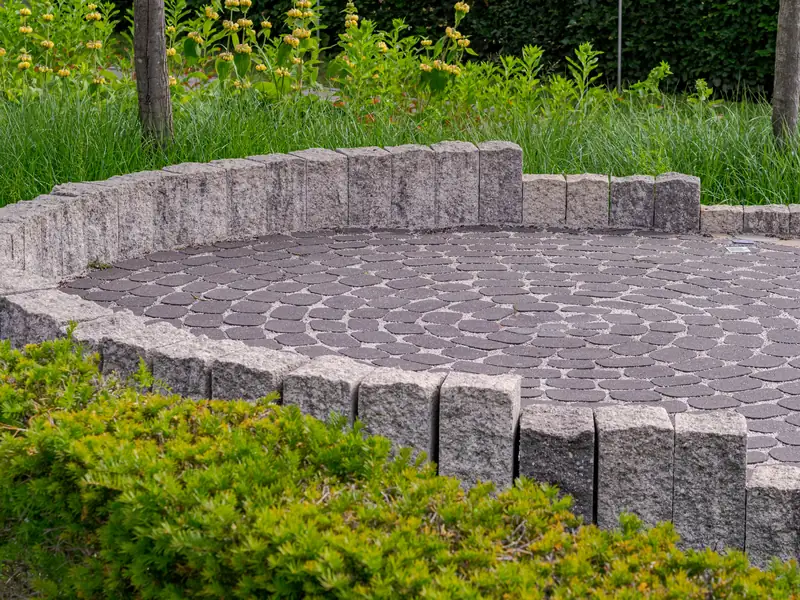
A paver patio in Orlando runs $10–$17 per sq ft installed as of October 2026. The city reviews pavers on a patio under the same engineering permit it uses for concrete, and in Lake Nona's Laureate Park neighborhood a homeowners' architectural review board signs off on the layout before that permit is even filed.
By the Opera Concrete & Pavers estimating team · Updated October 1, 2026
Get a free estimate
Tell us about the project and we'll call to set up a free site visit.
Pavers on a patio still need the engineering permit, but skip the MOU
Patio and walkway pavers fall under the same engineering permit review the city applies to a patio slab or a driveway, since the submission covers “pavers, asphalt, concrete” as one category (City of Orlando, Residential Permitting Requirements). The separate City Paver's Memorandum of Understanding only applies where pavers cross into the public right-of-way, so a backyard patio or a front walkway that stays on private property skips that extra document (Engineering Standards Manual §8.11). Inside one of the city's six historic districts, a Certificate of Appropriateness still applies to a visible front paver walkway (Residential Permitting Requirements).
Picking a paver thickness for a patio that only sees foot traffic
ICPI sets 60 mm (2.375 inches) as the standard thickness for pedestrian areas and residential driveways, reserving 80 mm (3.125 inches) units for streets and industrial pavement. A patio in Orlando that only carries foot traffic, patio furniture and the occasional wheelbarrow doesn't need the heavier unit some homeowners request after seeing it quoted for a driveway elsewhere. Going thicker than the job calls for mostly adds cost without adding durability where the load never approaches vehicle weight. What does more for long-term performance on a foot-traffic surface is a properly compacted base and a snug joint, not a thicker unit sitting on a thin one.
A Baldwin Park porch and patio paver job, worked out in square feet
Say a Baldwin Park home relays 240 square feet of paver patio off the back porch. At $10–$17 per sq ft installed, that lands between roughly $2,400 and $4,080 depending on the paver and the base depth. A 2024 amendment to the neighborhood's residential guidelines added a flush-paver requirement for the front porch and walkway, so where that same crew also resets porch pavers, the finished surface has to sit flush with the surrounding grade rather than stepped or proud of it.
Laureate Park's Architectural Review Board reviews patios too
In Laureate Park, the Lake Nona neighborhood built around its namesake park, the Master Association requires its Architectural Review Board to approve “all improvements to your property (home, landscape, pool, fence, etc.)” before work starts, with the request submitted by email (Laureate Park Master Association FAQ). That review sits on top of, not instead of, the city's own engineering permit. Outside Lake Nona, a paver driveway or patio in most Orlando neighborhoods only has the city process to clear, though Baldwin Park and a handful of other communities run their own design committees as well.
What happens when the base is skipped or under-compacted
The most common failure on a paver patio isn't a cracked unit, it's a low spot where the base underneath was never compacted to spec. On flatwoods soils with a seasonal high water table within 18 inches of the surface, an under-compacted base settles unevenly as the ground saturates and dries through the year, and the pavers simply follow it down. A Orlando patio built on a thin or skipped base might look fine the day it's finished and show the first dish-shaped low spot after one full rainy season. There's no fix for this short of pulling the affected pavers, correcting the base and resetting them.
Why a paver patio's base isn't the same as a driveway's
Patios and driveways both sit on a compacted aggregate base, but the two bases aren't built to the same spec. ICPI Tech Spec 2 calls for at least 4 inches of compacted base under a patio or walkway on well-drained soil, compared with at least 6 inches under a residential driveway, because a dining set and a grill load the ground far more lightly than a parked car. We still compact that base in lifts and check it against 98 percent of standard Proctor density before the bedding sand goes down. Skip that step on a Orlando lot and the first rainy season finds every soft spot for you.
Day one on a paver patio job: layout and excavation
We start by staking the patio's actual footprint against the house, string lines pulled tight so the excavation depth accounts for base, bedding sand and paver thickness all at once rather than guessing and correcting later. Excavation on a Orlando lot usually goes a few inches past the planned finished grade to leave room for that full section, and we haul spoil off site the same day rather than stockpiling it on the lawn, since piled fill kills grass fast in Florida heat. By the end of day one the subgrade is cut, sloped and ready for whatever compaction the soil underneath needs.
Re-sanding paver joints before they open up
Joint sand works its way out over time through rain, foot traffic and the odd ant colony excavating a channel, and once it drops much below the top of the paver, the units can rock and the joint edges start to chip. Topping off joint sand and compacting it back in is routine upkeep, not a repair, and catching it before the joints are visibly open is what keeps it that way. On a well-used Orlando patio we'd expect this every couple of years, sooner in high-traffic zones near a door or a grill than in a quiet corner.
Frequently asked questions
Do paver patios need a separate permit from a paver driveway in Orlando?
They go through the same engineering permit category, covering pavers, asphalt and concrete together, but a patio that stays on private property skips the City Paver's Memorandum of Understanding that applies only where pavers extend into the right-of-way.
Does Laureate Park require approval for a new patio?
Yes. The Master Association's Architectural Review Board reviews property improvements, including patios, landscaping and pool areas, with requests submitted by email before work starts. That review runs alongside the city's engineering permit, not in place of it.
What is Baldwin Park's rule about flush porch pavers?
A 2024 update to the neighborhood's design guidelines requires pavers on the front porch and walkway to sit flush with the surrounding surface rather than raised or recessed, a detail worth planning for when releveling or replacing porch pavers there.
Sources
- Census Bureau PEP, City and Town Population Totals, Vintage 2025 (July 1, 2025)
- Census Reporter, Orlando FL (ACS 2020-2024 5-yr, B25035)
- City of Orlando — Apply for an Engineering Permit
- City of Orlando — Engineering Standards Manual, 5th ed.
- City of Orlando — Ordinance 2022-45 Parking Code Amendments
- City of Orlando — Residential Permitting Requirements
- City of Orlando — Apply for a Right-of-Way Permit
- City of Orlando — HB803 Residential Building Permit Exemption Guide
- City of Orlando, Baldwin Park/NTC Main Base: A Brief History
- Baldwin Park Network, Residential Owners Association / ARC
- Baldwin Park Residential Guidelines (Updated 2024)
- Lake Nona, About
- Laureate Park Master Association FAQ
- City of Orlando Ordinance 2020-13 (Tree Preservation, Ch. 60 Part 2B)
- USGS WRI 03-4257, Hydrogeology and Quality of Ground Water in Orange County, Florida
- Florida Senate Interim Report 2011-104 (sinkhole insurance)
- NRCS OSD Myakka
- NRCS OSD Smyrna
- SJRWMD Watering Restrictions
- Orange County — Do I Need a Permit
- Orange County — Residential Pavers
- Orange County — A Guide for Residential Plan Approval
- F.S. 720.3045 (2026) Installation, display, and storage of items
- Florida Statutes §125.572 — synthetic turf on single-family lots
- Florida Administrative Code — Rule 62-308.100, Synthetic Turf (effective May 19, 2026)
- City of Orlando — Historic Preservation Districts
- Wikipedia, Lake Adair–Lake Concord Historic District
Ready for a price on your project?
Request a free estimate
Tell us about the project and we'll call to set up a free site visit.