
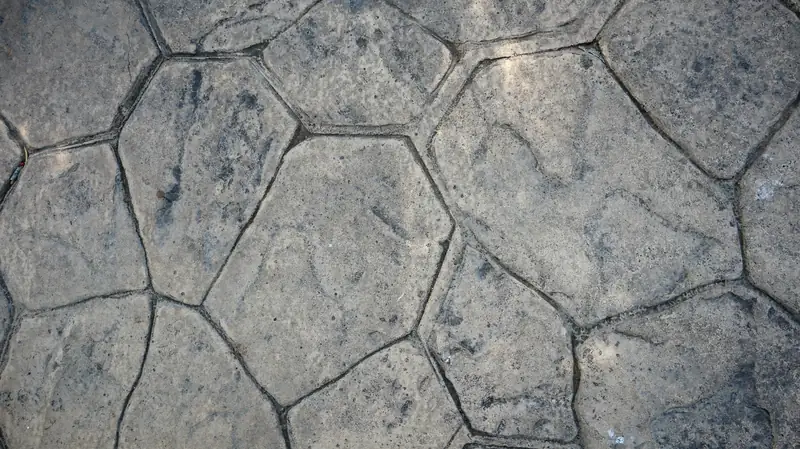
Stamped Concrete · Orlando, FL
Stamped Concrete Driveways and Patios in Orlando
Stamped concrete in Orlando runs $8–$19 per sq ft installed as of October 2026, depending on the pattern and the number of colors used. Inside any of the city's six historic preservation districts, a pattern or color change on a visible driveway or walk needs a Certificate of Appropriateness filed alongside the engineering permit, a step a plain gray pour outside those districts skips.
By the Opera Concrete & Pavers estimating team · Updated October 1, 2026
Get a free estimate
Tell us about the project and we'll call to set up a free site visit.
Six historic districts, and why pattern and color need sign-off there
Orlando has designated six historic preservation districts: Downtown (1980), Lake Cherokee (1981), Lake Copeland (1984), Lake Eola Heights (1989), Lake Lawsona (1994) and Colonialtown South (2000) (City of Orlando, Historic Preservation Districts). A visible change to a driveway or front walk inside one of those districts, including a new stamped pattern or an integral color that wasn't there before, needs a Certificate of Appropriateness submitted with the engineering permit application (City of Orlando, Residential Permitting Requirements). College Park, just outside those six, carries its own federally recognized Lake Adair–Lake Concord Historic District, where the same review practice is worth checking with the city before a color is picked (Wikipedia, Lake Adair–Lake Concord Historic District).
The front-yard coverage cap treats stamped concrete the same as plain
Orlando's 2022 parking-code draft caps the front or street-side yard's impervious coverage at 40 percent for “any driveway, parking, or turn around configuration,” regardless of the finish poured (City of Orlando, Ordinance 2022-45). A stamped border or an accent band doesn't change that calculation; the driveway still has to run 7 to 18 feet wide at the property line and no wider than 20 feet through the front setback. We account for that cap at the design stage, before a stamped pattern or a decorative border adds square footage the permit can't cover.
Flatwoods Water Tables Under a Stamped Pool Deck
A stamped pool deck sits close to grade, and across much of Greater Orlando and the Suncoast the ground underneath is flatwoods soil, Myakka, Smyrna or EauGallie among them, with a water table that can sit within 18 inches of the surface for a stretch of most years. That is workable ground, but only once the saturated layer is identified and removed rather than assumed away because the pool itself is nearby. A Orlando pool deck poured over soggy native soil without compacted fill underneath settles unevenly around the shell faster than the rest of the yard, since the shell itself does not move the way the surrounding slab can.
The Order of Operations Between the Pour and the Stamp
A stamped slab goes through more finishing steps than a plain one before a broom or a trowel gets put away: screed and bull float first, then color hardener broadcast and floated in where it is used, then edging and the control joint layout, then a texture skin check to confirm the surface has firmed up enough to hold an imprint. Only after that does the crew press the stamp mats in, working panel by panel, followed by hand tools at borders and tight corners the mats cannot reach. On a Orlando pour, rushing ahead to any one of those steps before the previous one is finished is the most common way a stamped job goes wrong.
A historic-district stamped concrete replacement, worked out in square feet
Say a home in Colonialtown South replaces a plain apron-and-walk combination, 300 square feet, with a slate-pattern stamped finish and an integral color. At $8–$19 per sq ft installed, that lands between roughly $2,400 and $5,700 depending on the number of colors and the release agent used. Before the pour, the color and pattern go to the city's Historic Preservation Board for a Certificate of Appropriateness, a step that doesn't apply to the same job on a lot outside one of the six districts.
Four Inches Is the Driveway Standard, Decorative or Not
A stamped driveway built for daily passenger traffic follows the same thickness rule as a plain one: 4 inches at 3,000 to 4,000 psi, with Florida's code minimum of 3 1/2 inches written for ordinary floors rather than a surface carrying a car's weight every day. Thickness does not change because the surface will be stamped and colored. What changes is the price of getting it wrong: thickening a plain driveway later means breaking out and repouring gray concrete, while fixing an undersized stamped Orlando driveway means matching a pattern, a color and however much the sealer has already weathered before the repair crew shows up.
A Crack That Forms Before Stamping Runs Straight Through the Pattern
Plastic shrinkage cracking shows up when the evaporation rate off a fresh slab climbs above roughly 0.2 pounds per square foot per hour, the kind of hot, breezy, low-humidity afternoon Florida produces often enough, and on a surface that has not been stamped yet, those thin parallel cracks run straight across whatever pattern eventually goes over them. A Orlando pour on a day like that needs windbreaks, a fog spray or a dampened subgrade before the first mat is even brought out, because once a crack like this forms it cannot be stamped away, only patched in a way that rarely matches the surrounding color and texture. Watching conditions matters more here than on a job that will stay plain gray.
Reading Wear Instead of a Calendar Before Resealing
No fixed interval sets when a stamped surface needs its sealer reapplied; UV exposure, foot and tire traffic, and for a pool deck, splashed pool chemicals all wear a sealer down at different rates depending on sun and use. A Orlando homeowner is better off watching for the signs, a duller sheen, color that looks chalky rather than saturated, water that no longer beads on the surface, than waiting for a specific number of years to pass. Resealing before those signs turn into actual wear on the concrete underneath keeps the color protected and costs far less than letting the surface go bare.
Frequently asked questions
Do I need special approval for a stamped concrete color in a historic district?
Yes, inside any of Orlando's six historic preservation districts, a Certificate of Appropriateness has to be filed with the engineering permit before a new pattern or integral color goes down on a visible driveway or walk.
Does the 40 percent coverage limit apply to stamped concrete differently than plain concrete?
No, the 2022 parking-code draft treats any driveway, parking pad or turnaround the same regardless of finish, so a stamped pattern or decorative border still counts toward the front or street-side yard's coverage cap.
Which Orlando neighborhoods are designated historic districts?
Downtown, Lake Cherokee, Lake Copeland, Lake Eola Heights, Lake Lawsona and Colonialtown South are the city's six designated districts, with College Park's Lake Adair–Lake Concord Historic District recognized separately on the National Register of Historic Places.
Sources
- Census Bureau PEP, City and Town Population Totals, Vintage 2025 (July 1, 2025)
- Census Reporter, Orlando FL (ACS 2020-2024 5-yr, B25035)
- City of Orlando — Apply for an Engineering Permit
- City of Orlando — Engineering Standards Manual, 5th ed.
- City of Orlando — Ordinance 2022-45 Parking Code Amendments
- City of Orlando — Residential Permitting Requirements
- City of Orlando — Apply for a Right-of-Way Permit
- City of Orlando — HB803 Residential Building Permit Exemption Guide
- City of Orlando, Baldwin Park/NTC Main Base: A Brief History
- Baldwin Park Network, Residential Owners Association / ARC
- Baldwin Park Residential Guidelines (Updated 2024)
- Lake Nona, About
- Laureate Park Master Association FAQ
- City of Orlando Ordinance 2020-13 (Tree Preservation, Ch. 60 Part 2B)
- USGS WRI 03-4257, Hydrogeology and Quality of Ground Water in Orange County, Florida
- Florida Senate Interim Report 2011-104 (sinkhole insurance)
- NRCS OSD Myakka
- NRCS OSD Smyrna
- SJRWMD Watering Restrictions
- Orange County — Do I Need a Permit
- Orange County — Residential Pavers
- Orange County — A Guide for Residential Plan Approval
- F.S. 720.3045 (2026) Installation, display, and storage of items
- Florida Statutes §125.572 — synthetic turf on single-family lots
- Florida Administrative Code — Rule 62-308.100, Synthetic Turf (effective May 19, 2026)
- City of Orlando — Historic Preservation Districts
- Wikipedia, Lake Adair–Lake Concord Historic District
Ready for a price on your project?
Request a free estimate
Tell us about the project and we'll call to set up a free site visit.