
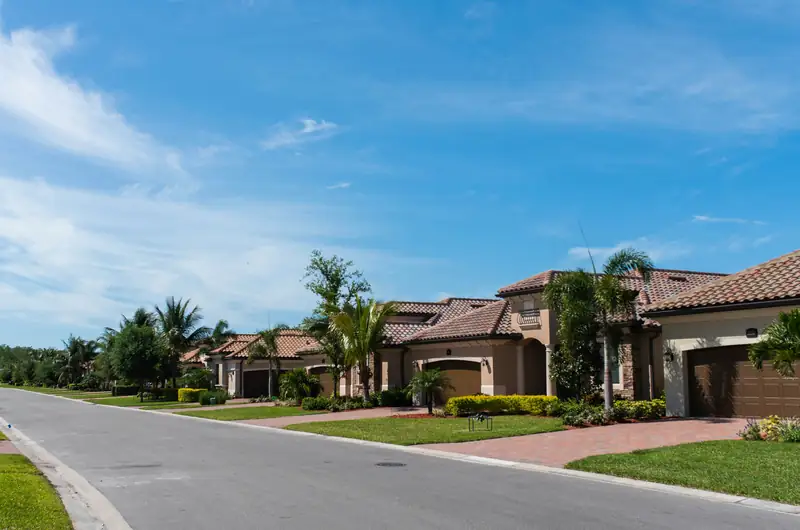
Pavers · Greater Orlando & Sarasota
Paver Driveways, Patios, Pool Decks and Walls Built on One Compacted Base
Opera lays paver driveways, patios and walkways, pool deck pavers, retaining walls and paver sealing, plus artificial turf set between paver fields. As of October 2026, Florida market data puts installed pavers at $10 to $30 per sq ft depending on material; every paver surface starts with a compacted aggregate base, never bare sand, across Greater Orlando and Sarasota–Manatee.
Get a free estimate
Tell us about the project and we'll call to set up a free site visit.
Five paver services, one base system
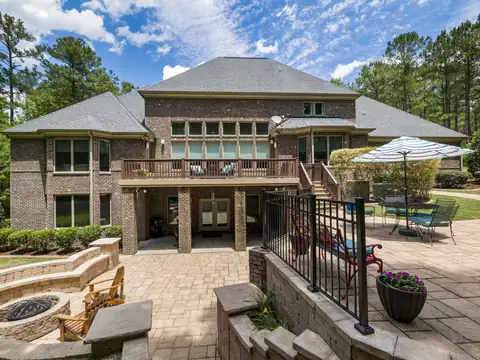
Every paver job on this site is built the same way, from the ground up: a compacted aggregate base, a screeded layer of bedding sand, individual units set and compacted together, and edge restraint locking the field at every border. What changes between services is the load the base has to carry and the material on top. Paver driveways get the deepest base, since a car is the heaviest thing most residential paving ever carries. Paver patios and walkways carry foot traffic and furniture on a thinner base. Pool deck pavers add the coping detail and lean toward travertine or lighter-colored units. Paver sealing and restoration isn't a new install at all, it's cleaning, re-sanding, sealing and releveling units that have already been down for a while. And retaining walls share the idea of a compacted base but carry soil pressure instead of foot or vehicle traffic, which changes the detail behind the wall more than the detail under it. Artificial turf fits into this family too, wherever it runs as an accent strip inside a paver field rather than across an open lawn.
How do you choose among them?
The table below maps the common starting points to the service that covers them.
| If you need... | Start here | Why |
|---|---|---|
| A new or replacement driveway | paver driveways | 60 mm pavers standard, 80 mm for RVs, boats or work trucks, over a 6-in. base |
| A back patio, walkway or fire-pit area | paver patios and walkways | 60 mm pavers over a 4-in. base; lighter foot-traffic load |
| The surface around a pool | pool deck pavers | Travertine or concrete pavers set to the coping; cooler underfoot than dark concrete |
| A sunken, stained or shifted paver surface | paver sealing and restoration | Cleaning, re-sanding, sealing and releveling, not a new install |
| A retaining wall, raised planter or seat wall | retaining walls | Segmental block with drainage behind the wall, not just under it |
| A turf accent inside a paver field | artificial turf | Same washed-rock base as a full lawn, tied into the paver's edge restraint |
Materials: concrete, travertine, clay brick and porcelain
The unit itself moves the price more than the base work underneath it does. Concrete pavers sit at the lower end of the Florida range; brick, porcelain and natural stone climb from there mostly on material cost.
| Material | Range | Note |
|---|---|---|
| Concrete pavers | $10 to $18 | Widest color and pattern selection; easiest to spot-repair one unit at a time |
| Clay brick | $12 to $22 | A fixed, fired-in color that doesn't fade the way a pigmented concrete unit can |
| Porcelain | $15 to $30 | A dense, low-absorption surface that needs a flat, well-compacted base |
| Travertine | $13 to $45 | Natural stone; the material most homeowners pick for a pool deck for how it feels underfoot |
Angi, paver driveways; HomeGuide, travertine.
Travertine and porcelain need sealing more routinely than concrete pavers do, since they're more porous or show staining more easily; concrete pavers can go years without a sealer and still hold up structurally.
The base system every paver surface shares
ICPI's Tech Spec 2, the industry construction standard for interlocking concrete pavements, sets the base depth by use: residential driveways need at least 6 in. of compacted aggregate on soil that drains well, with 2 to 4 in. more where it doesn't; patios and walkways need roughly 4 in. on the same well-drained soil (ICPI Tech Spec 2). Bedding sand screeds to an uncompacted 1 in. everywhere, laid last and never compacted before the pavers go down. Joint width stays at an eighth of an inch or less, filled with dry or polymeric sand once the field is set. Edge restraint runs the full perimeter of every paver surface, and anywhere the material changes, since nothing else stops the field from creeping sideways under load; landscape edging sold for flower beds doesn't count (ICPI Tech Spec 3).
| Layer | Driveways | Patios and walkways |
|---|---|---|
| Compacted aggregate base | 6 in. minimum, well-drained soil | 4 in. minimum, well-drained soil |
| Subgrade compaction | 98% standard Proctor | 98% standard Proctor |
| Paver thickness | 60 mm (80 mm for RVs, boats, trucks) | 60 mm |
| Bedding sand | 1 in. screeded, uncompacted before laying | 1 in. screeded, uncompacted before laying |
Sealing: optional, and on no fixed schedule
ICPI Tech Spec 5, the industry's own guidance on paver care, doesn't set a required resealing interval; an acrylic coat typically holds up a few years before it's worth recoating, which varies by traffic, climate and product. What isn't optional is topping off joint sand as it thins from rain and foot traffic, since a loose joint is what lets a field spread or shift. New pavers can also show a whitish efflorescence bloom within about 60 days; it's cosmetic and fades on its own, not something a sealer has to fix. Our paver sealing service covers cleaning, re-sanding, sealing and releveling, and the post on efflorescence explains the white haze in more detail.
Paver services
Every service below shares the base system above, built to the depth and load the surface needs.
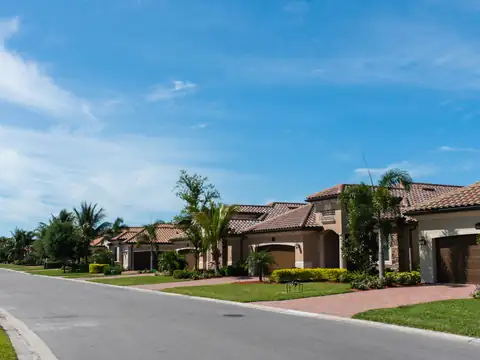
Paver Driveways
Market range $10–$30 per sq ft installed · cost guide
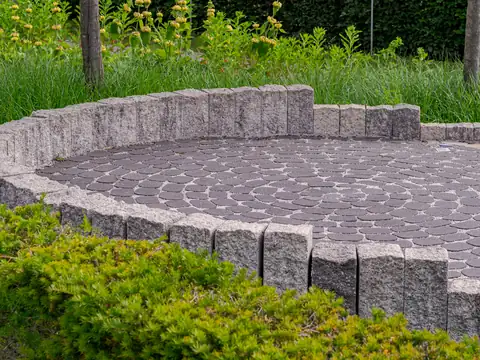
Paver Patios & Walkways
Market range $10–$17 per sq ft installed · cost guide
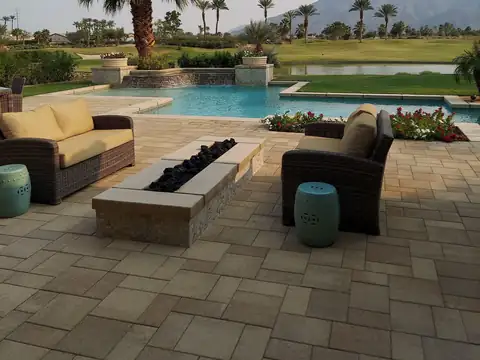
Pool Deck Pavers
Market range $12–$30 per sq ft installed · cost guide
Paver Sealing & Restoration
Market range $1.50–$3.25 per sq ft (clean, re-sand, seal) · cost guide
Retaining Walls
Market range $15–$40 per sq ft of wall face · cost guide
What paver work costs in Florida
As of October 2026, Florida market data puts an installed paver driveway at $10–$30 per sq ft and a paver patio at $10–$17, both well above plain concrete, since the per-unit material and the labor to set and compact each piece cost more than one continuous pour. These are market ranges compiled from published Florida and national cost-guide data, not a quote for a specific yard; a written price follows a site visit. Full breakdowns by size and material: driveways, patios, pool decks, sealing and retaining walls.
Frequently asked questions
What's the difference between a paver patio and pool deck pavers?
The units and base principles are the same; what changes is the edge. Pool deck pavers meet the coping with a continuous edge restraint and a layout planned around drains, skimmers and the pool's isolation joint, while a patio's restraint only has to hold the field together at the perimeter. Material choice leans toward travertine or a lighter concrete paver around a pool more often than on a patio, mainly for how it feels underfoot in full sun.
Which paver material costs the least installed?
Concrete pavers, typically $10 to $18 per sq ft installed in current Florida market data, run below clay brick, porcelain and travertine. The gap is almost entirely in material cost, not labor; the base, bedding sand and edge restraint are priced about the same no matter which unit goes on top. Concrete pavers also carry the widest color and pattern selection, part of why they're the most common driveway material in both service areas.
Can artificial turf be set as a strip or border between pavers?
Yes. A turf accent inside a driveway, along a walkway edge or framing a fire pit uses the same washed-rock subgrade Florida's turf rule requires everywhere else, but it ties into the paver field's existing edge restraint instead of standing on its own perimeter. That's a different detail than laying turf over the top of an existing paver surface, which uses a drainage layer rather than an excavated base.
Does a retaining wall need the same base as a paver patio?
No. A retaining wall carries soil pressure behind it, so its base is a compacted leveling pad of crushed stone under the first course, plus drainage, gravel backfill and a perforated pipe behind the wall to relieve water pressure. A paver patio's base carries foot traffic on top, not soil pressure from behind, so the two share the idea of a compacted aggregate base but not the same depth or drainage detail.
Is a paver pool deck more work to maintain than a paver patio?
Not structurally, but it sees more exposure. Pool chemicals, sunscreen residue and more frequent water contact mean a pool deck's joints and sealer, where sealed, wear faster near the coping than a patio's do across the rest of the yard. The base, bedding sand and edge restraint underneath don't need anything different; it's the surface care, rinsing and resealing on whatever schedule the product needs, that runs on a shorter clock near the water.
Sources
- ICPI Tech Spec 2 Construction of Interlocking Concrete Pavements (2020)
- ICPI Tech Spec 3 Edge Restraints (2020)
- ICPI Tech Spec 5 Cleaning, Sealing and Joint Sand Stabilization (2020)
- Angi — Paver Driveway Cost
- HomeGuide — Travertine Pavers Cost
- HomeGuide — Driveway Pavers Cost
- HomeGuide — Paver Patio Installation Cost
Ready for a price on your project?
Request a free estimate
Tell us about the project and we'll call to set up a free site visit.