
What Is the White Haze on New Pavers and Concrete (Efflorescence)?
Efflorescence is a white, chalky deposit of mineral salts that moisture carries to the surface of new pavers or concrete and leaves behind as it evaporates. It can peak within about 60 days of installation, doesn't affect structural performance, and generally fades on its own; as of October 2026, we wait roughly a season before sealing a new surface so an active bloom doesn't get trapped under the coat.
By the Opera Concrete & Pavers estimating team · Updated October 1, 2026
What Is the White Stuff on My New Pavers?
That white haze is efflorescence, a deposit of soluble mineral salts, mostly calcium carbonate, carried to the surface by moisture moving through the paver or concrete and left behind once the water evaporates. It isn't dirt, mold or a sealer failure, and the industry's own technical guidance is direct that it has no effect on how the material performs structurally, only on how it looks (ICPI Tech Spec 5). Our paver sealing and restoration service includes the cleaning step that handles an efflorescence bloom once it's run its course; this page is about what causes it and when it's safe to clean.
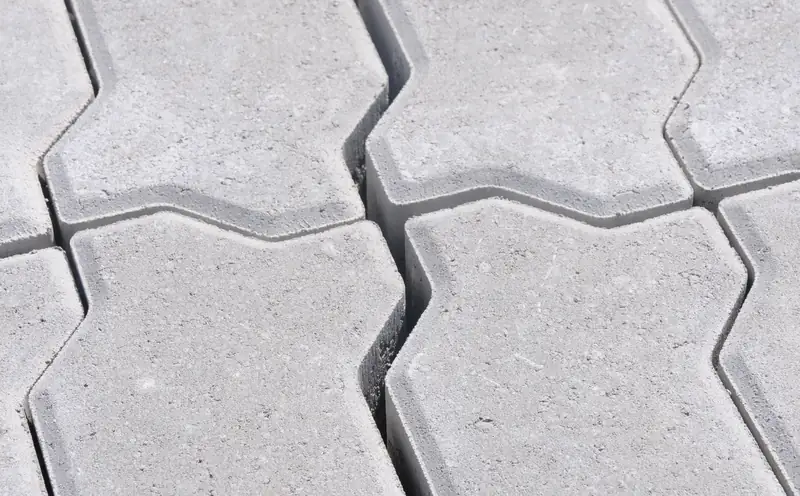
What Actually Causes Efflorescence?
Three things have to happen together: soluble compounds already present inside the concrete or paver material, moisture moving through it to dissolve and carry those salts, and evaporation at the surface that leaves the dissolved minerals behind once the water itself is gone (Concrete Masonry & Hardscapes Association, TEK 08-03A). A newly poured slab or a freshly installed paver field has plenty of moisture moving through it in its first weeks and months, which is exactly why efflorescence shows up most often on new work rather than on a surface that's been in place for years. An installer can control the recipe and the install, but not the weather that follows it, which is why the same batch of pavers can bloom differently on two driveways poured the same week.
How Long Does It Take to Show Up, and How Long Does It Last?
New concrete pavers can peak within roughly 60 days of installation, and a surface installed during the dry season may not show any bloom at all until the first real wet-season rain drives moisture through it for the first time (ICPI Tech Spec 5). Left alone, efflorescence generally fades with normal weathering and rainfall on its own, becoming lighter and less noticeable over time unless something keeps feeding it a fresh supply of water and salts, a persistent irrigation leak or a drainage problem funneling water through the same spot repeatedly (CMHA TEK 08-03A). A bloom that keeps returning in the same exact spot season after season is usually a sign of ongoing moisture movement there, not a sign that the first cleaning didn't work.
Does This Happen on Poured Concrete Too, Not Just Pavers?
Yes. A poured concrete patio, driveway or pool deck can bloom the same way a paver field does, since the same three ingredients, soluble salts, moisture and evaporation, are present in ordinary concrete as much as in a precast paver unit. A freshly placed slab that was wet-cured or covered with a curing compound sometimes shows a faint, even haze across the whole surface rather than the patchier bloom typical of pavers, simply because the entire slab cured under similar moisture conditions at once. Stamped and colored concrete can show the same haze, and on a darker integral color it tends to stand out more than it would on plain gray.
Say You Just Had a Stamped Concrete Patio Poured in a Kissimmee Backyard
A hazy, uneven lightening across the new patio within the first month or two is a common early call on exactly this kind of job, especially if the pour landed right before a stretch of rainy-season weather pushed moisture through the slab while it was still young. It isn't a sign the integral color was mixed wrong or the sealer failed, since the haze is sitting on top of the color coat rather than inside it. The practical move is to let the patio finish its first season before judging the color against a sample board, since a bloom that looks patchy in month one is often close to invisible by month four once normal weathering runs its course.
How Do You Remove Efflorescence Without Damaging the Surface?
For a light bloom, dry brushing followed by a thorough water rinse is usually enough, since much of a young efflorescence deposit hasn't bonded tightly to the surface yet (CMHA TEK 08-03A). A heavier or stubborn bloom calls for a cleaner formulated for the job rather than a generic household product, and a dilute acid solution is common in professional cleaning, applied carefully and always tested on an inconspicuous section first, since a solution strong enough to dissolve the deposit can also lighten the color of the surface underneath it (CMHA TEK 08-03A). Our guide to cleaning pavers without ruining the joints or sealer covers the DIY-safe version of this step by step.
Why Sealing Too Early Can Trap the Problem Instead of Solving It
A sealer coat sits on top of the surface and slows how quickly moisture moves through it afterward, which is exactly backward from what an active efflorescence bloom needs. Coating a paver field or a patio before the mineral deposit has finished working its way out risks locking some of it under the new coat instead, where it can show up later as a cloudy patch rather than fading the way an uncoated bloom does on its own. Giving a new installation roughly a season to weather before the first sealing visit, rather than sealing on a fixed schedule tied to the install date, is the more reliable approach in practice. our paver sealing page goes through the full cleaning, re-sanding and sealing sequence in order.
Frequently asked questions
Does efflorescence mean my new pavers or concrete are defective?
No. It's a normal byproduct of moisture moving through cement-based material while it's relatively new, and the industry's own technical guidance states plainly that it doesn't affect structural performance or durability. A heavy bloom can look alarming against a dark color, but a light one is close to universal on new concrete and paver work.
Is efflorescence the same thing as mold or algae on pavers?
No, and they're worth telling apart before cleaning either one. Efflorescence is a mineral deposit that comes from inside the material itself and shows up as a dry, chalky white haze; mold and algae are biological growth that needs an outside moisture source and organic matter to establish, and it reads as a darker, often greenish or blackish film rather than a white one. Our guide to mold and algae on Florida pavers and concrete covers that separate problem.
Will efflorescence come back after I clean it off?
Usually it fades for good once the original moisture from construction has fully worked its way out, with no further treatment needed. If it keeps reappearing in the same spot, that's a sign of a recurring moisture source feeding it, an irrigation head hitting the same area or a drainage path concentrating water there, which is worth fixing at the source rather than cleaning the same spot repeatedly.
Can I pressure wash efflorescence off pavers myself?
For a light bloom, yes, with the wand held at an angle rather than straight down into the joints so it doesn't blast out the joint sand along with the mineral deposit. A heavier bloom that doesn't budge with water alone usually needs a cleaner made for the job rather than stronger pressure, since cranking up the pressure risks etching the surface before it actually removes the deposit.