
Concrete · Greater Orlando & Sarasota
Concrete Driveways, Patios, Pool Decks and More, Built to One Florida Spec
Opera pours seven kinds of concrete work: driveways, patios, pool decks, stamped concrete, walkways, slabs and repair. As of October 2026, Florida market data puts a plain concrete driveway at $6 to $15 per sq ft installed, with a stamped patio running higher. Every service shares the same 4-inch, 3,000 to 4,000 psi build standard, scaled by load, across Greater Orlando and Sarasota–Manatee.
Get a free estimate
Tell us about the project and we'll call to set up a free site visit.
Seven jobs, one trade
Concrete work on this site splits into seven services, and most of what separates them is load and finish rather than the trade itself. Concrete driveways carry daily vehicle weight and are built to a thicker standard than anything else on this list. Concrete patios and walkways carry foot traffic and furniture, so they're poured lighter. Pool decks add a slope toward drains and an isolation joint at the coping that neither driveways nor patios need. Stamped concrete isn't a separate build at all, it's a decorative finish that can go on a driveway, patio or pool deck without changing the thickness underneath. Concrete slabs cover the utility pours, pads for a shed, an AC unit, an RV or a garage addition, sized by what sits on them. And concrete repair is the odd one out: it starts from an existing slab rather than bare ground, fixing cracks, resurfacing worn surfaces or cutting out and replacing a section that's past saving.
How do you choose among them?
Most homeowners already know roughly what they need; the table below maps the common starting points to the right service.
| If you need... | Start here | Why |
|---|---|---|
| A new or replacement driveway | concrete driveways | Built for daily vehicle load; 4 in. standard, 5 to 6 in. for RVs and trailers |
| A back patio, lanai pad or outdoor-kitchen base | concrete patios | Lighter foot-traffic spec; broom, trowel or stamped finish |
| The slab that rings a pool | concrete pool decks | Isolation joint at the coping, slope toward drains, cool-touch finish options |
| A decorative pattern on any of the above | stamped concrete | A finish option, not a separate base or thickness |
| A front walk, side path or sidewalk repair | sidewalks and walkways | A narrower, lighter-load spec, including right-of-way sections |
| A pad for a shed, AC unit, RV or garage floor | concrete slabs | Thickness and strength set by what sits on it |
| A cracked, sunken or failing existing slab | concrete repair and resurfacing | Crack repair, an overlay or a cut-out-and-replace, not a new pour |
The engineering every concrete surface in Florida shares
Underneath the differences, every one of these seven services answers to the same handful of numbers. Florida's residential code sets 3½ in. as the bare floor for any slab on the ground, though almost nothing we build stays at that minimum (FBC Residential Ch. 5). Strength requirements scale with weathering exposure rather than one fixed number; FBC Table R402.2 calls for 2,500 psi at the lightest class, climbing to 3,500 psi at the most severe, and most residential flatwork in our area lands at 3,000 to 4,000 psi regardless (FBC Residential Table R402.2). Control joints follow NRMCA's rule of thumb across every service: roughly 24 to 36 times the slab's thickness, which on a standard 4-inch pour puts the saw cuts about 8 to 12 ft apart, each one scored to roughly a quarter of the slab's depth (NRMCA CIP 6). And every pour in a Central Florida or Suncoast summer runs into the same heat problem: concrete placed above 95°F, or at an evaporation rate past 0.2 lb per sq ft per hour, is prone to cracking before it ever carries a load, which is why an early start and a minimum three-day moist cure, by compound or wet curing, are standard on every service rather than an upcharge (ACI; NRMCA CIP 12).
| Element | Standard |
|---|---|
| Code-floor thickness | 3½ in. for any ground-supported slab |
| Typical built thickness | 4 in. for driveways and patios; 5 to 6 in. under RVs, boats and heavy trailers |
| Strength | 2,500 psi minimum by weathering class; 3,000 to 4,000 psi typical residential flatwork |
| Control joints | 24 to 36 times slab thickness, roughly 8 to 12 ft on a 4-in. slab, cut a quarter of the depth |
| Curing in Florida heat | At least 3 days moist cure; earlier starts and a curing compound once concrete nears 95°F |
Build standards above the code floor; see FBC Residential Ch. 4 and 5, and NRMCA CIP 6 and 12 for the underlying rules.
Two regional facts explain why those numbers matter here more than in a drier, cooler state. Much of both service areas sits on flatwoods soil, with a seasonal high water table that can sit within 18 in. of the surface for part of most years, which is reason enough to test and compact the subgrade on each job rather than quote one base depth for every lot. And the wet season, running roughly from late May into mid-October, puts an afternoon downpour on the forecast often enough that scheduling a pour or a base lift around it is routine, not an exception.
Concrete services
Every service below shares the engineering above, scaled to its own load and finish.
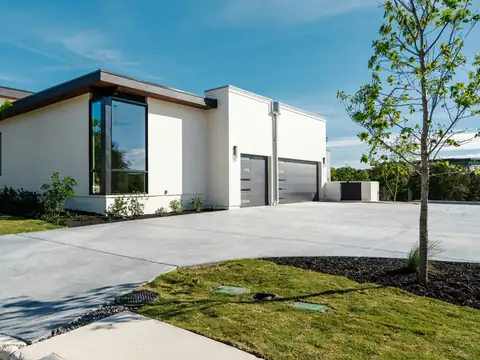
Concrete Driveways
Market range $6–$15 per sq ft installed · cost guide
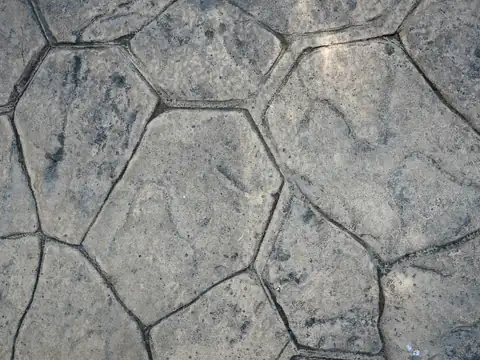
Concrete Patios
Market range $6–$13 per sq ft installed · cost guide
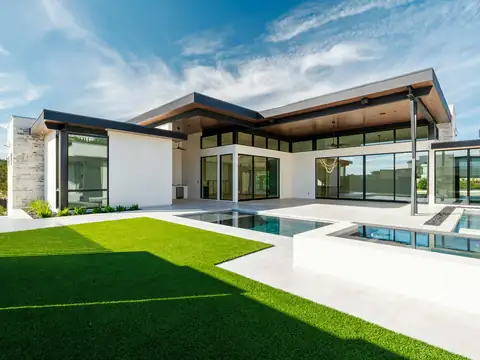
Concrete Pool Decks
Market range $5–$15 per sq ft installed · cost guide
Stamped Concrete
Market range $8–$19 per sq ft installed · cost guide
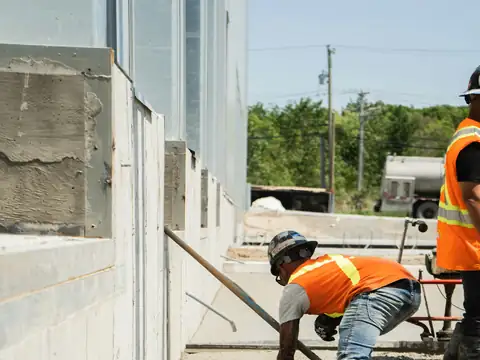
Sidewalks & Walkways
Market range $7–$17 per sq ft installed · cost guide
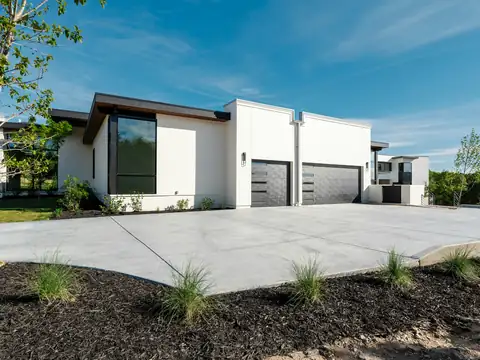
Concrete Slabs
Market range $4–$10 per sq ft installed · cost guide
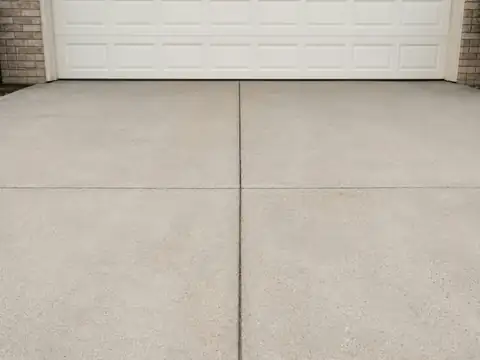
Concrete Repair & Resurfacing
Market range $3–$10 per sq ft (resurfacing) · cost guide
What concrete work costs in Florida
As of October 2026, Florida and national market data puts a plain concrete driveway at $6–$15 per sq ft installed, a concrete patio at $6–$13, and stamped concrete, which adds color, pattern and sealer labor on top of the same base pour, at $8–$19. A pool deck resurfacing job runs lower than a new pour, since it reuses the existing base. These are market ranges compiled from published Florida and national cost-guide data, not a quote for your project; a written price follows a site visit. Each service's own cost guide breaks the range down by size and scope: driveways, patios, stamped concrete, pool decks, slabs, walkways and repair.
Permits, HOAs and repair vs. replace
Almost every concrete job that touches the right-of-way, the strip between the sidewalk and the street, needs a permit even where the rest of the driveway doesn't. HOAs add a second approval in master-planned communities, and since 2026 a Florida association can't require a government permit to already be issued before it will review an application (F.S. 720.3035). Florida's lien law adds its own paperwork above $2,500: a Notice of Commencement, signed by the owner and recorded with the county, has to be in place before the job gets underway (F.S. 713.13). The permits and HOA hub has the full jurisdiction table, and getting HOA approval for a new driveway or pool deck walks through the paperwork.
Not every cracked or sunken slab needs to come out, either. A hairline crack along a control joint is the joint doing its job; a section that's sunk or heaved usually points to the base, not the concrete mix. Resurface or replace a concrete driveway and which driveway cracks are normal in Florida cover how to tell the difference before calling anyone out.
Frequently asked questions
What's the difference between a concrete patio and a concrete slab?
A patio is finished and often decorative work meant to be lived on, broom, stamped or trowel-finished flatwork usually tied to the house by a door or a lanai. A slab is a utility pour in our pricing, a pad for a shed, an AC unit, a generator or a parking spot, sized by what sits on it rather than by foot traffic. The base and thickness principles are the same; the finish and the layout usually aren't.
Is exposed aggregate its own service, or a finish option?
It's a finish, not a separate service. Exposed aggregate is a plain or decorative pour with the top layer of paste washed or etched away to expose the stone underneath, available on a driveway, patio or walkway at the same thickness and joint spacing the base concrete work would use. It's priced as a finish upgrade on whichever service page covers the surface you're building.
Can stamped concrete be added to a plain slab after it's already poured?
Sometimes, as a stamped overlay rather than new stamped concrete. A bonded overlay goes over an existing slab that's still in good structural condition and can be stamped and colored, though the pattern reads shallower than one stamped into a fresh pour. A slab with wide cracks, settlement or a failing base isn't a good overlay candidate; our concrete repair and resurfacing page covers when cutting it out and starting over makes more sense.
Does a concrete pool deck need a different build than a patio?
The slab itself follows the same thickness and strength standard as a patio, but a pool deck adds two details a patio doesn't need: a slope graded toward drains and away from the house or the pool, and an isolation joint at the coping so the deck and the pool's shell can move independently. Skipping either one is the most common reason a pool deck cracks or holds water sooner than it should.
Do all seven concrete services use the same control-joint spacing?
The spacing rule is the same across all of them, roughly 24 to 36 times the slab's thickness, which works out to about 8 to 12 ft on a standard 4-inch pour. What changes is the layout: a driveway's joints usually run straight across a rectangle, a patio's are planned around furniture areas and door thresholds, and a stamped surface's joints are routed along a pattern line instead of cut as a visible groove.
Sources
- 2020 FBC Residential Ch. 5 Floors (UpCodes)
- 2020 FBC Residential Ch. 4 Foundations (UpCodes)
- NRMCA CIP 6 Joints in Concrete Slabs on Grade
- NRMCA CIP 12 Hot Weather Concreting
- ACI FAQ - Maximum temperature limits for hot-weather concreting
- F.S. 713.13 (2026) Notice of commencement
- F.S. 720.3035 (2026) Architectural control covenants
Ready for a price on your project?
Request a free estimate
Tell us about the project and we'll call to set up a free site visit.