
Stamped Concrete · Sarasota, FL
Stamped Concrete Driveways and Patios in Sarasota
Stamped concrete in Sarasota runs $8–$19 per sq ft installed as of October 2026. Older in-town neighborhoods, Laurel Park among them, pair narrower lots with mature live oak canopy, which shapes both the pattern choice and the permit path.
By the Opera Concrete & Pavers estimating team · Updated October 1, 2026
Get a free estimate
Tell us about the project and we'll call to set up a free site visit.
Why pattern choice reads differently on a 1920s-1950s lot
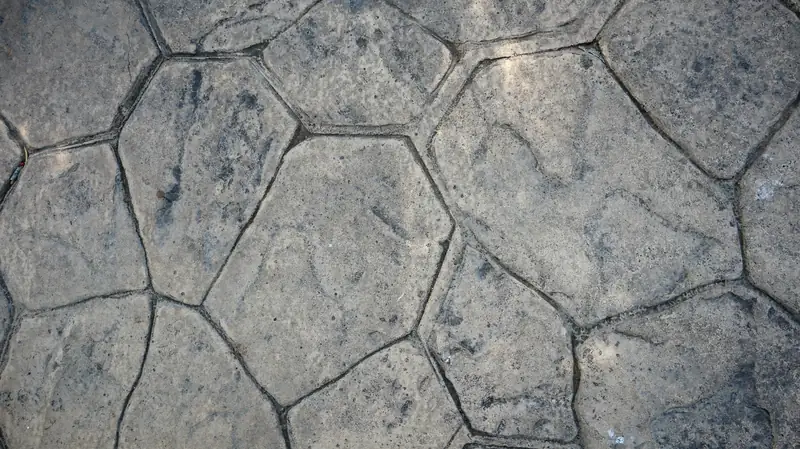
Laurel Park, listed on the National Register of Historic Places in March 2008, covers roughly 50 acres just south of downtown and contains about 250 contributing buildings built between 1920 and 1957 Laurel Park Historic District. A slate or ashlar stamped pattern in a muted integral color tends to read as period-appropriate on a lot like that in a way a bright stamped cobble pattern sized for a 1990s subdivision driveway does not; it's a styling call homeowners here make more often than in the unit's newer towns. The release agent and sealer choice matter just as much on a narrow in-town lot, since there is less room between the driveway edge and the house to correct a color that reads wrong in afternoon shade.
Flatwoods Water Tables Under a Stamped Pool Deck
A stamped pool deck sits close to grade, and across much of Greater Orlando and the Suncoast the ground underneath is flatwoods soil, Myakka, Smyrna or EauGallie among them, with a water table that can sit within 18 inches of the surface for a stretch of most years. That is workable ground, but only once the saturated layer is identified and removed rather than assumed away because the pool itself is nearby. A Sarasota pool deck poured over soggy native soil without compacted fill underneath settles unevenly around the shell faster than the rest of the yard, since the shell itself does not move the way the surrounding slab can.
Building a stamped slab close to a protected live oak
Older in-town lots carry more mature canopy, and Sarasota's own tree rule applies regardless of the decorative finish on the slab: any tree over 4.5 inches in diameter needs a permit to remove or relocate, a live oak or sand live oak 24 inches or larger is a Grand Tree, and root pruning near either has to be finished and inspected by the city arborist before building-permit inspections can proceed, with barricades set at least 20 feet from a Grand Tree's trunk City of Sarasota, Tree Protection. A stamped driveway extension that crowds a live oak's root flare is worth flagging to the arborist before the forms go in, not after excavation has already disturbed the root zone.
Sealer Grit Is a Spec Decision Around a Pool, Not an Afterthought
A stamped pool deck gets wet in a way a driveway rarely does, and a sealer with a slip-resistant additive mixed in, usually a fine polymer grit, has to be part of the spec for that surface rather than chosen later. A driveway or front walkway in Sarasota can often get by with a standard sealer, but the same product on a wet pool deck turns a textured stamped surface slick underfoot even though the pattern itself still has grip built into it. Deciding on grit at the sealing stage, not after the first slippery afternoon by the pool, is the difference between a textured deck that performs as designed and one that only looks like it does.
Say you have a 400 sq ft stamped-concrete front walk and entry patio on a Laurel Park-era lot with a large live oak near the walk
Say you have a 400 sq ft stamped-concrete front walk and entry patio on a Laurel Park-era lot with a large live oak near the walk. At the market range of $8–$19 per sq ft, that runs $3,200 to $7,600, or roughly $4,800 to $6,400 in the typical $12–$16 band depending on the pattern and number of colors. Before excavation starts, the oak's root zone is measured against the city's protected-tree barricade distance, and if the new walk's edge sits inside it, the arborist inspection has to clear before the forms go in. A slate or ashlar pattern in a single integral color is the choice we steer toward on a lot this close to a historic grid, over a brighter multi-color cobble pattern that reads newer than the house around it.
The Base Has to Pass Inspection Before the Color Goes Down
A permit inspection, when Sarasota or the county requires one, almost always happens at the forming and base stage, well before color hardener, release agent or stamp mats enter the picture, because none of that groundwork is visible once the surface is finished. On a stamped job, a delay at this point costs more than it would on a plain pour, since pushing the pour date back can also push the job out of the narrow weather window the crew planned to stamp in, particularly during the rainy season. Scheduling the inspection as early as the permit process allows protects not just the pour date but the sequence of finishing steps lined up behind it.
Rain on a Half-Stamped Surface Is Worse Than Rain on a Bare Slab
A downpour hitting plain concrete before it sets can wash out the surface finish, but the same storm hitting a slab mid-stamp, after color hardener is down and some mats are pressed in but others are not, can streak the color unevenly and blur the texture on whichever panels caught the worst of it. On a Sarasota job, that risk is why crews track the radar through the stamping window the same way they would through the pour itself, not just up to the point the truck leaves. Patching a rain-damaged section of a stamped surface afterward almost always leaves a visible seam where the repair meets the original color and pattern.
A Hairline Crack Usually Follows a Grout Line First
On a stamped surface, ordinary shrinkage cracking tends to travel along the weakest point available, which is often a grout line already built into the pattern, rather than cutting a random path the way it might across plain concrete. A Sarasota homeowner checking a patio or driveway for cracks can start by looking along the pattern's existing lines before assuming a crack running elsewhere is something worse. What is worth a call, on a stamped surface the same as any other, is a sudden depression paired with cracking that reaches toward a structure, not a hairline that has been sitting quietly along a grout line for a season or two.
Frequently asked questions
Does a stamped-concrete pattern need to match Laurel Park's historic look?
There's no code requirement tied to the stamp pattern itself, but a muted slate or ashlar pattern tends to suit a 1920s-1950s house better than a bright multi-color cobble pattern sized for a newer subdivision, so it's the default we suggest on older in-town lots.
Can I pour stamped concrete close to a live oak in Sarasota?
Only after the root zone is checked. Any tree over 4.5 inches in diameter is protected, and a Grand Tree 24 inches or larger requires root pruning to be finished and inspected by the city arborist before building-permit inspections proceed.
Does stamped concrete cost more than plain concrete in Sarasota?
The market range here is $8–$19 per sq ft versus $6–$15 for plain concrete, reflecting the integral color, release agent and stamping labor; the subgrade and permit questions are the same either way.
Sources
- City of Sarasota Code §29.5-7 Curb cuts and driveways
- City of Sarasota Code §29.5-8 Erosion and siltation control permits
- City of Sarasota Public Works — Engineering (ROW permits)
- City of Sarasota Building Permit Requirement Guidelines
- City of Sarasota Zoning Code §VI-203 (Table VI-203)
- City of Sarasota Zoning Code §VI-907 Coastal Islands Overlay
- City of Sarasota permitting portal
- City of Sarasota, Tree Protection
- City of Sarasota - SWFWMD Modified Phase III extended
- Census Reporter, Sarasota FL (ACS 2020-2024 5-yr, B25035)
- Census Bureau PEP, City and Town Population Totals, Vintage 2025 (July 1, 2025)
- FDOT Structures Design Guidelines Vol. 1, §1.3.2 environmental classification
- FEMA - Features of Flood Insurance Rate Maps in Coastal Areas
- FDEP Coastal Construction Control Line Program
- FDEP — Apply for a CCCL permit
- SWFWMD District Water Restrictions
- Florida Administrative Code — Rule 62-308.100, Synthetic Turf (effective May 19, 2026)
- Florida Statutes §125.572 — synthetic turf on single-family lots
- NRCS OSD EauGallie
- NRCS OSD Immokalee
- Laurel Park Historic District, National Register of Historic Places (listed March 11, 2008)
- City of Sarasota tree protection ordinance — root-pruning, barricades and arborist inspection (Div. 3.1)
Ready for a price on your project?
Request a free estimate
Tell us about the project and we'll call to set up a free site visit.