
How Hot Does Artificial Turf Get in Florida, and How Do You Keep It Cooler?
UF/IFAS Extension in Orange County measured synthetic turf running up to 100°F hotter than natural grass on peak summer days, with surface readings reaching as high as 160°F. Shade, a lighter color and timing outdoor use for mornings or evenings cut that heat more than anything applied after installation. A quick hose rinse helps for about an hour, as of October 2026.
By the Opera Concrete & Pavers estimating team · Updated October 1, 2026
How Hot Does Artificial Turf Get in Florida?
Hotter than almost anything else in a Florida yard. UF/IFAS Extension in Orange County reports that on peak summer days, synthetic turf surface temperatures can run up to 100°F hotter than natural grass nearby, reaching as high as 160°F, while living grass stays far more moderate thanks to shade and the cooling effect of transpiration (UF/IFAS Extension, Orange County). A separate account of the same UF research, citing Fort Lauderdale Research and Education Center faculty, put peak turf readings at roughly 174°F on the hottest days (The Invading Sea). The two figures differ because they're measured on different days and sites, but both point the same direction: turf in full Florida sun gets too hot for bare feet or paws for stretches of a summer afternoon.
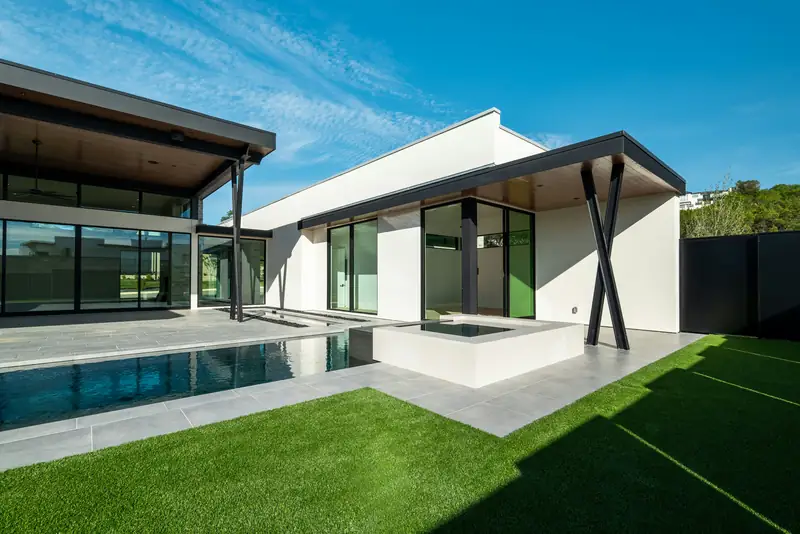
Why Turf Runs Hotter Than Grass
Living grass cools itself through transpiration, the same process that keeps a tree canopy noticeably cooler than open pavement, releasing moisture that carries heat away as it evaporates. Synthetic fiber and infill have no such mechanism; they absorb solar radiation and hold it at the surface instead of shedding it. Darker fiber and darker infill both absorb more than lighter versions of the same product, which is why color matters on a turf lawn the same way it matters on a pool deck or a driveway.
Does Rinsing Turf With Water Actually Cool It Down?
Yes, but only for a short window. A university study out of Greece measured artificial turf surface temperatures dropping by as much as 30°C (about 54°F) right after irrigation, with that cooler reading holding for roughly 90 to 120 minutes before the surface climbed back toward its pre-irrigation temperature (WSEAS Transactions on Environment and Development, 2024). That study wasn't run in Florida, but the mechanism, water evaporating off the surface and carrying heat with it, works the same way here. A quick hose-down before kids or pets use a turf area buys a real window of relief; it isn't a permanent fix, and Florida's own turf rule doesn't allow an in-ground sprinkler zone to do that job automatically.
Ways to Make an Artificial Turf Area Cooler
A few choices at installation, and a few habits afterward, make a real difference without changing the product entirely.
- Site turf where afternoon shade reaches it, a tree canopy, a pergola or the house's own shadow, rather than in the most exposed, full-sun stretch of the yard. Any tree used for shade still has to sit outside the canopy's drip line under Florida's turf rule, unless a certified arborist signs off.
- Choose a lighter fiber or infill color where the product line offers one; darker 'true green' shades read better in photos but run hotter underfoot.
- Keep a hose handy for a quick rinse before midday use, knowing the cooling effect fades within one to two hours rather than lasting all afternoon.
- Avoid running turf directly against a west-facing wall, fence or dark hardscape that radiates its own heat back onto the lawn in the late afternoon.
Is Artificial Turf Too Hot for Bare Feet or Pets?
During the hottest stretch of a Florida afternoon, often yes, by UF/IFAS's own measurements above. Scheduling outdoor time for mornings or evenings, when surface temperatures drop well below their midday peak, matters more for comfort than any product choice. Pets add their own wrinkle since paw pads sit much closer to the surface than bare human feet do; our guide to artificial turf for dogs covers paw safety, odor and drainage together.
Does Turf Heat Change the Way We Design a Lawn?
It changes where we put furniture, seating and play equipment more than it changes whether turf gets specified at all. A turf lawn that doubles as a side-yard dog run, a play area, or the surface right outside a lanai door gets planned with afternoon shade or a planting buffer in mind from the start, rather than treated as an afterthought once the panels are already down. A decorative accent strip between pavers, or a small putting green used mostly in the morning or evening, carries far less of a heat penalty than an open, full-sun lawn meant for midday use. artificial turf covers how lawns, pet areas, putting greens and paver accents each get built; heat is one more variable that shapes the layout on top of drainage and the state's material rule.
| Use | Typical sun exposure | Heat planning that helps |
|---|---|---|
| Open front or back lawn | Often full sun most of the day | Shade structure, lighter color, or limit peak-hour use |
| Side-yard pet area | Varies by lot; often narrower and partly shaded by fencing or the house | Site along the shadier side of the yard where the layout allows it |
| Putting green | Usually open for a clean sightline | Plan for morning or evening play rather than midday |
| Paver accent strip | Matches the surrounding paver field's exposure | Smaller footprint limits how much hot surface is underfoot at once |
General layout guidance, not a measured comparison between uses.
A Quick Example
Say you're planning a turf side yard in a Kissimmee subdivision with full southern exposure and no mature trees yet. Without added shade, that lawn behaves like the UF measurements above through the hottest part of the day. Planning a pergola or fast-growing shade tree into the same project, and picking a lighter-toned product, does more for comfort than anything done after installation. artificial turf and the artificial turf cost guide cover what that planning looks like in practice.
Related Reading
Frequently asked questions
Can artificial turf burn bare feet in Florida?
At its peak, turf can reach temperatures hot enough to be uncomfortable or painful underfoot; UF/IFAS Extension in Orange County reports readings up to 160°F on the hottest summer days (UF/IFAS Extension). Shade, timing outdoor use for mornings or evenings, and a quick rinse before bare feet touch it all help manage that risk.
Does shade really lower turf temperature?
Yes, consistently. Turf in full sun absorbs solar radiation directly; turf under a tree canopy, a pergola or even a building's own shadow for part of the day never reaches the same peak. It's one of the most reliable ways to cut turf heat, alongside choosing a lighter color.
Is there a type of infill that stays cooler?
Lighter-colored infill generally runs cooler than darker infill, the same reflectance principle that applies to any outdoor surface in direct sun. We don't have a verified, product-by-product comparison to point to beyond that general rule, so ask a specific manufacturer for its own testing data if heat is a priority.
Does hosing turf down help for more than a few minutes?
Research on artificial turf cooling found the effect fades within about one to two hours after watering, not all afternoon (WSEAS Transactions on Environment and Development, 2024). It's a useful tool right before use, not a substitute for shade or a lighter color.
Is turf hotter in Orlando or on the coast in Sarasota?
No verified comparison between the two metro areas exists. How hot a specific lawn gets depends far more on sun exposure, shade and color than on which Florida city it's in; a shaded turf area in either place runs cooler than an exposed one in the other.